Best BMW Jack Pad Adapter and Jacking Tools for DIY Maintenance
If you work on your BMW yourself, one of the first tools you should own is a proper BMW jack pad adapter.
BMW jack points are not the same as a flat frame rail on an older car. Most modern BMWs use rectangular plastic jack pads along the rocker area, and lifting the car with the wrong setup can damage the jack point, rocker trim, or underbody.
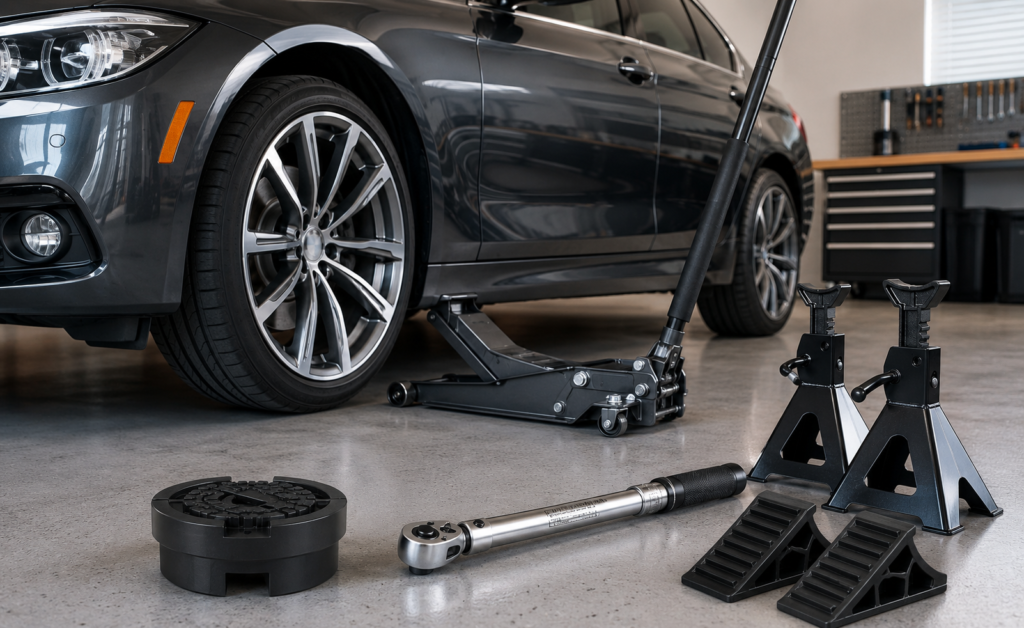
The good news is that you do not need a complicated garage setup to lift a BMW safely for basic DIY maintenance. You need the right adapter, a proper floor jack, jack stands, wheel chocks, and a torque wrench if you are removing wheels.
This guide breaks down the best BMW jack pad adapter and jacking tools for DIY maintenance, including what each tool does and what to avoid before lifting your car.
As an Amazon Associate I earn from qualifying purchases.
How this guide is built: This guide focuses on practical BMW owner use cases, common buying mistakes, and tools that reduce hassle during DIY maintenance. The goal is to help you choose the right setup before spending money, not list every product available.
Best BMW Jacking Tools at a Glance
For most BMW DIY owners, the safest basic jacking setup includes:
- BMW jack pad adapter: protects the factory jack point
- Low-profile floor jack: helps reach lower BMWs and M Sport models
- 3-ton jack stands: support the car after lifting
- Rubber wheel chocks: help keep the car stable
- 1/2-inch torque wrench: helps reinstall wheels properly
If you only buy one tool from this list, start with the jack pad adapter. If you plan to remove wheels or work under the car, do not stop there. A floor jack lifts the car, but jack stands support it.
Best BMW Jack Pad Adapter and Jacking Tools Shortlist
Use this shortlist as a practical starting setup for basic BMW maintenance, wheel removal, brake work, inspections, and garage use.
BMW Jack Pad Adapter
Best for: Protecting BMW jack points
A BMW jack pad adapter fits into the factory rectangular jack point and gives your floor jack a safer lifting surface. This is the first tool to buy if you want to avoid damaging the plastic jack pad or rocker area.
Watch out for: Confirm the adapter fits your BMW jack points before using it.
Low-Profile Floor Jack
Best for: Lifting lower BMWs
A low-profile floor jack is easier to slide under many BMWs, especially M models, lowered cars, and performance trims. It gives you more control than the emergency jack and is better suited for garage maintenance.
Watch out for: Use it for lifting, not for supporting the car while you work.
3-Ton Jack Stands
Best for: Supporting the car safely
Jack stands are not optional if you are working under the car or removing wheels for more than a quick check. A floor jack lifts the BMW, but jack stands are what support it while you work.
Watch out for: Never rely on a hydraulic floor jack alone while working.
Rubber Wheel Chocks
Best for: Keeping the car stable
Wheel chocks are cheap, simple, and easy to overlook. They help keep the BMW from moving while one end is lifted, especially when working on a driveway or garage floor.
Watch out for: Use them on the wheels that stay on the ground before lifting.
1/2-Inch Torque Wrench
Best for: Reinstalling wheels properly
A torque wrench helps you tighten wheels properly after brake work, wheel cleaning, inspections, or tire changes. It is one of the most useful tools for BMW owners who remove their own wheels.
Watch out for: Always use the correct torque spec for your BMW model.
Do BMWs Need a Jack Pad Adapter?
Most BMW owners should use a jack pad adapter when lifting from the factory side jack points. The adapter helps the floor jack contact the rectangular jack point more securely instead of pressing directly against the plastic pad or surrounding rocker area.
You may be able to lift a BMW without one in some situations, but it is not the cleaner DIY approach. A jack pad adapter is cheap compared with damaged plastic jack points, crushed trim, or an unstable lift point.
What Tools Do You Need to Jack Up a BMW Safely?
For basic garage maintenance, most BMW owners should have a simple lifting setup:
- BMW jack pad adapter
- Low-profile floor jack
- Jack stands rated for the vehicle
- Wheel chocks
- Torque wrench if wheels are removed
This setup is useful for brake work, wheel cleaning, visual inspections, suspension checks, tire rotations where applicable, and general DIY maintenance.
Why a Low-Profile Floor Jack Helps on BMWs
Many BMWs sit low enough that a standard tall floor jack can be awkward to use. M Sport models, lowered cars, and performance trims can make clearance even tighter.
A low-profile floor jack gives you better access under the side jack points and front lift areas, depending on the model. It also gives you more control than the emergency jack that comes with some vehicles.
The key is to combine the floor jack with the correct jack pad adapter and then support the vehicle with jack stands before working.
Never Work Under a BMW Supported Only by a Floor Jack
A floor jack is for lifting. It is not a safe long-term support. If you are removing wheels, reaching under the car, working on brakes, or doing anything that puts part of your body under the vehicle, use jack stands on a stable surface.
This is not the place to be cheap or casual. A proper jack stand setup is basic garage safety.
When a Torque Wrench Matters
If you remove BMW wheels, a torque wrench matters when reinstalling them. Over-tightening can damage hardware or make future removal harder. Under-tightening is obviously dangerous.
Use the correct torque spec for your BMW model and wheel setup. A 1/2-inch click-style torque wrench is enough for most DIY owners doing basic wheel, brake, and maintenance work.
What to Avoid When Jacking Up a BMW
Avoid these common mistakes when lifting your BMW:
- Using the floor jack directly on the plastic jack pad without an adapter
- Working under the car while it is supported only by a hydraulic jack
- Skipping wheel chocks on the wheels that stay on the ground
- Using weak or unstable jack stands
- Lifting from random underbody points without confirming they are safe
- Reinstalling wheels without checking torque specs
What Jobs Can These BMW Jacking Tools Help With?
A basic BMW jacking setup supports a lot of common DIY maintenance jobs, including:
- Brake pad inspection or replacement
- Wheel cleaning and brake dust removal
- Suspension inspections
- Exhaust inspections
- Wheel swaps
- Checking for leaks or loose components
If you are also dealing with warning lights or maintenance messages, pair your garage tools with a BMW-capable scanner. See the BMW diagnostic tool guide for scanner options.
If you are building a basic BMW garage setup, battery maintenance belongs with your scanner, jack pad adapter, and jacking tools. See the BMW battery tender guide for smart maintainer options.
A jack pad adapter, floor jack, jack stands, wheel chocks, and torque wrench are part of a larger basic BMW garage setup. See the BMW tools and garage essentials guide for the main tools DIY owners should prioritize.
Final Recommendation
For most BMW DIY owners, the first tool to buy is a BMW jack pad adapter. It is cheap, simple, and helps protect the factory jack points from damage.
After that, build the rest of the setup around safety: a low-profile floor jack, proper jack stands, wheel chocks, and a torque wrench if you remove wheels. That combination gives you a practical garage setup for basic BMW maintenance without turning the page into a full professional shop build.
Do not lift a BMW like a generic car and do not work under a car supported only by a jack. Use the right adapter, support the vehicle properly, and torque the wheels correctly when the job is done.