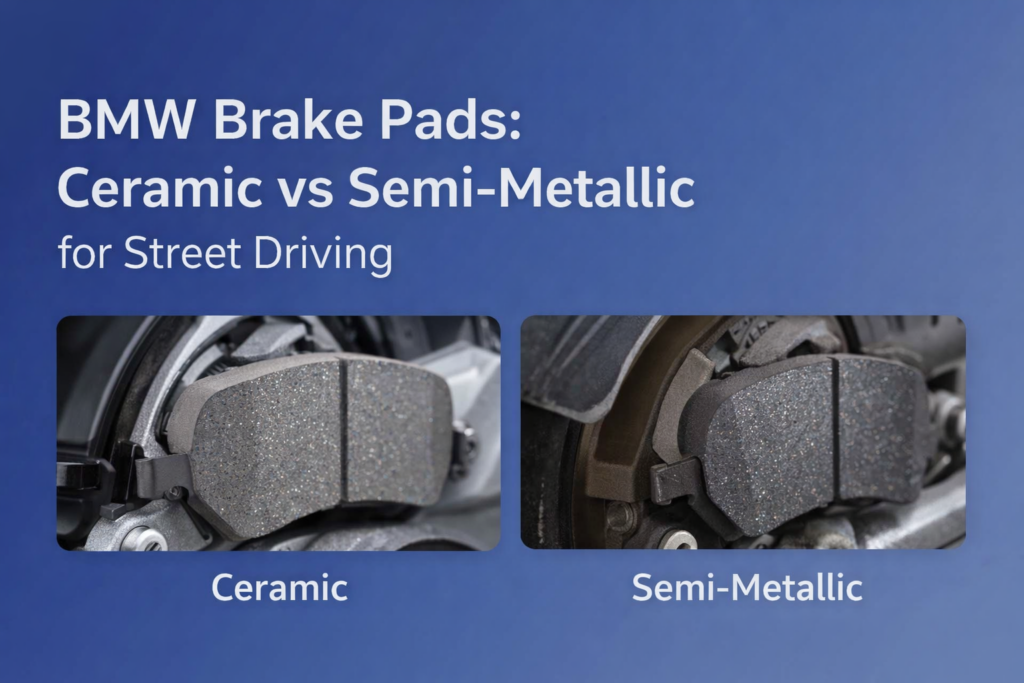
BMW Brake Pads: Ceramic vs Semi-Metallic for Street Driving
Choosing between ceramic and semi-metallic BMW brake pads for street driving comes down to tradeoffs. Ceramic pads are usually cleaner and quieter, while semi-metallic pads often give you stronger bite and a more aggressive feel. The right choice depends on how you actually drive the car.
This is where a lot of BMW owners get stuck. They search for the “best” brake pads without first deciding whether low dust, quiet operation, and daily comfort matter more than stronger initial bite and a more performance-oriented feel.
If your BMW is mainly street-driven, this decision is usually less about “which pad is better” and more about which compromise you are more willing to live with.
If you want to compare brake parts by BMW fitment before buying, start here.
Coming soon: BMW Owner Maintenance & Upgrade Tracker
I’m testing interest in a simple Google Sheets and printable PDF tracker for BMW owners. Use it to organize service history, repair costs, scanner codes, warning lights, brake/tire/battery notes, parts, upgrades, and upcoming maintenance.
Planned launch price: $17. Join early access to be notified if the first version launches.
What is the difference between ceramic and semi-metallic brake pads?
At a simple level, ceramic and semi-metallic pads prioritize different things.
- Ceramic brake pads are usually quieter, create less visible dust, and are often better for daily comfort.
- Semi-metallic brake pads usually give stronger bite, more heat tolerance, and a more aggressive braking feel.
Neither is automatically “best” for every BMW owner. The smarter choice depends on what kind of street driving you actually do.
Why ceramic brake pads make sense for many BMW daily drivers
If your BMW is a daily driver and you care about cleaner wheels, less brake dust, and quieter operation, ceramic pads often make more sense.
For a lot of street-driven BMWs, that is the better trade:
- less visible brake dust
- less noise in normal driving
- more comfort for everyday use
- a calmer, cleaner daily-driver feel
This is one reason low-dust ceramic-style street pads are so popular with BMW owners who are not trying to build a track car.
Related: Best BMW Brake Pads for Street Driving (Quiet, Low Dust Options)
Why semi-metallic brake pads may be better for stronger bite
If you care more about stronger initial bite and a more aggressive braking feel, semi-metallic pads may be the better fit.
That does not automatically mean they are the smarter choice for every street-driven BMW. It means they often appeal more to drivers who want sharper brake response and are more willing to accept extra dust, more noise, or a slightly harsher feel as the tradeoff.
For some owners, that is absolutely worth it. For others, it makes the car less pleasant in everyday use.
Best for low dust and cleaner wheels
If low dust is one of your biggest priorities, ceramic pads are usually the better direction.
This matters a lot for BMW owners who are tired of constantly cleaning front wheels or who want a pad setup that feels more civil in daily use.
If low-dust street driving is your priority, ceramic usually makes more sense than semi-metallic.
Best for stronger street bite
If your priority is stronger brake feel and sharper response, semi-metallic pads may be the better fit.
But this is also where buyers need to be honest with themselves. If the car is mostly driven in traffic, commuting, and normal street conditions, a more aggressive pad may not actually improve ownership enough to justify the extra dust or noise.
What most BMW street drivers should avoid
If you want to avoid wasting money, avoid these mistakes:
- choosing the most aggressive pad without thinking about dust and noise
- assuming stronger bite automatically means better street driving
- buying before confirming fitment for your exact BMW
- treating the car like a track build when it is really a daily driver
For most BMW owners driving mainly on the street, the better buy is usually the pad that fits the car’s real use, not the one that sounds most performance-oriented on paper.
Does fitment still matter when comparing ceramic vs semi-metallic pads?
Yes. This is one reason broad brake-pad recommendations can go wrong.
Even after you decide between ceramic and semi-metallic, you still need to choose the right fitment for your exact BMW. The pad type decision does not replace fitment-first shopping.
If you want to compare brake parts by exact BMW fitment, start here: Shop Brake Parts by BMW Fitment
Which one should most BMW owners choose for street driving?
For most daily-driven BMWs, ceramic pads usually make more sense if your priorities are:
- lower dust
- quieter driving
- cleaner wheels
- more comfortable everyday use
Semi-metallic pads usually make more sense if your priorities are:
- stronger initial bite
- more aggressive brake feel
- less concern about dust or noise
For a lot of BMW street drivers, the answer will be ceramic. For drivers who care more about feel than cleanliness or comfort, semi-metallic may be the better fit.
Final answer
For street driving, BMW ceramic brake pads usually make more sense if you want lower dust, quieter operation, and better daily comfort. Semi-metallic pads are often the better choice if you want stronger bite and a more aggressive braking feel. The best option depends on which tradeoff fits your real driving style.
If you want the best chance of buying the right brake pads the first time, compare fitment-first options for your BMW here.
Next reads:
- Best BMW Brake Pads for Street Driving (Quiet, Low Dust Options)
- BMW Brake Pad Warning Light: What It Means, What Causes It, and What to Do Next
- BMW Brake Warning Still On After Reset? What It Usually Means
- BMW Brake Pad Wear Sensor: Symptoms, Replacement, and Reset
- Resetting BMW Brake Pad Sensor: Step-by-Step After a Pad Change