BMW Tools: DIY Garage Essentials for Owners
Looking for the right BMW tools without wasting money on things you do not need? This page collects the main DIY garage essentials for BMW owners in one place. Each guide focuses on practical maintenance, common mistakes, and tools that make BMW ownership easier.
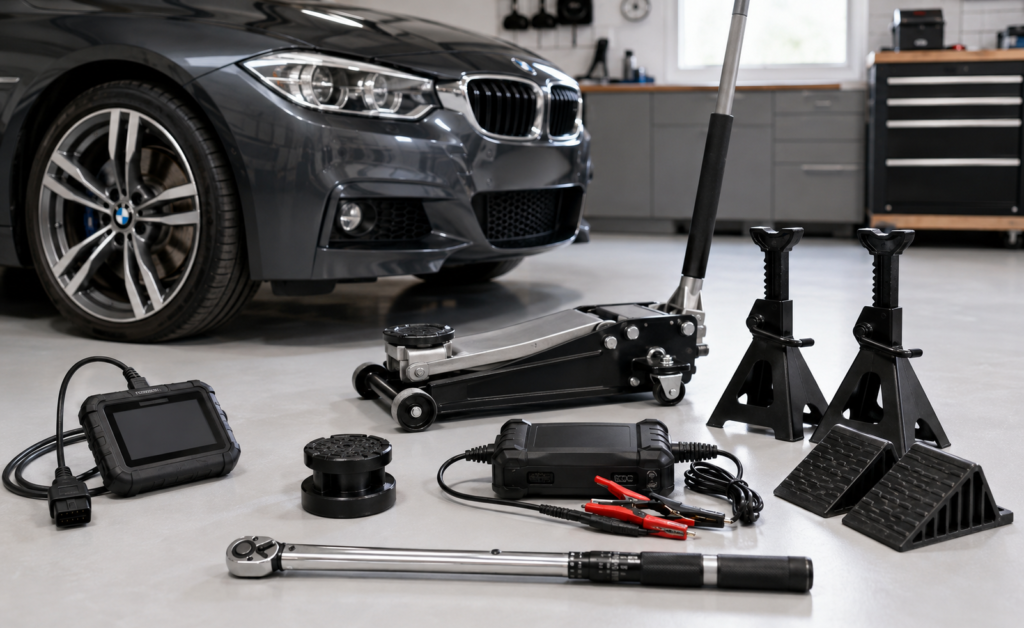
This is not a full professional shop tool list. It is a starting point for BMW owners who want to diagnose basic problems, lift the car safely, maintain the battery, and handle common DIY jobs with less guesswork.
Start Here: Most Useful BMW Tools
If you are building a basic BMW garage setup, start with these three areas first. They cover the most common problems BMW owners run into: warning lights, safe lifting, and battery maintenance.
BMW Diagnostic Tools
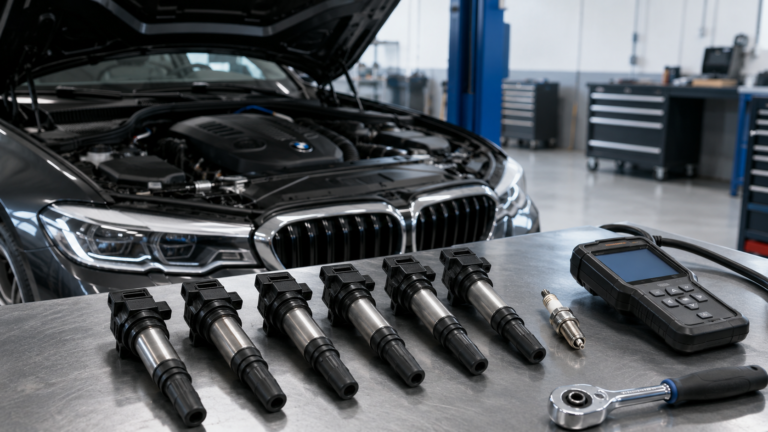
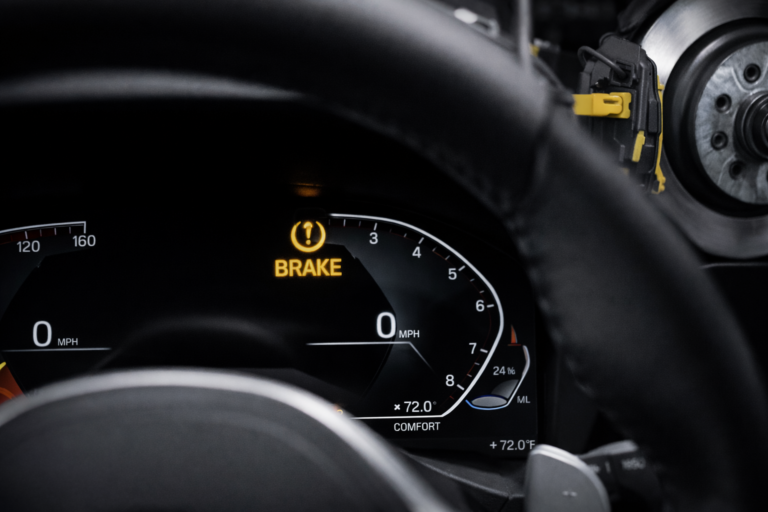
A BMW-capable scanner is one of the most useful tools a DIY owner can buy. It helps you read warning lights, check codes, diagnose misfires, understand brake warnings, and avoid replacing parts blindly.
- Best for check engine lights and warning messages
- Helpful for misfires, brake warnings, and service functions
- Better than guessing before replacing parts
BMW Jack Pad Adapter and Jacking Tools
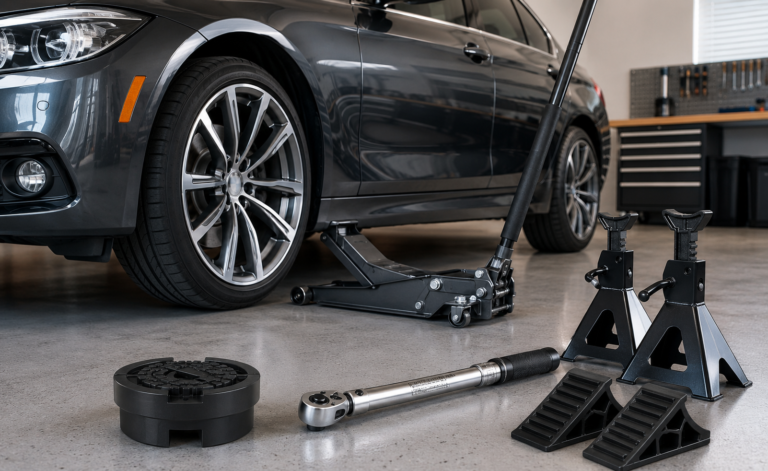
If you plan to inspect brakes, remove wheels, check suspension parts, or do basic garage work, you need a safe way to lift the car. A BMW jack pad adapter helps protect the factory jack points, while jack stands, wheel chocks, and a torque wrench make the setup safer and more useful.
- Best for protecting BMW jack points
- Useful before brake, wheel, suspension, or inspection work
- Safer than relying on a floor jack alone
BMW Battery Tenders and Maintainers
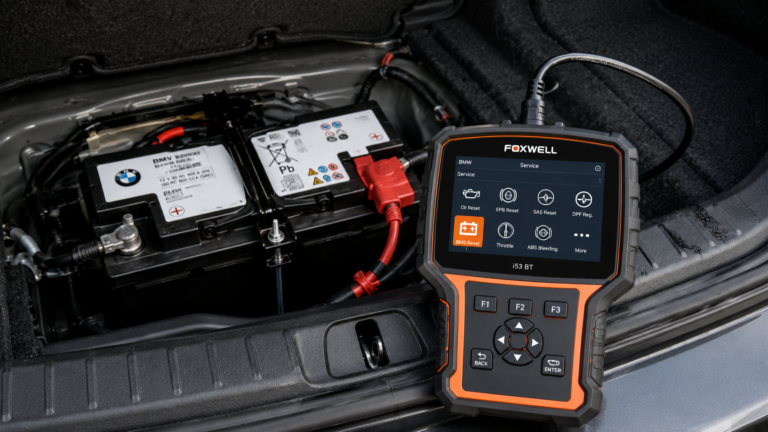
BMWs that sit for long periods, take mostly short trips, or spend winter in the garage can run into battery problems. A smart battery tender helps maintain the battery properly instead of letting voltage drop and trigger avoidable warnings.
- Best for garage-kept or weekend BMWs
- Helpful for winter storage and short-trip driving
- Important for AGM and lithium battery compatibility
BMW Tools by Job
Use these sections when you know what problem or maintenance job you are trying to handle.
For Warning Lights and Diagnostics
Start with a BMW diagnostic tool if the car has a check engine light, brake warning, battery warning, rough running, misfire, or service message. Pulling codes first is usually cheaper than guessing.
- BMW diagnostic tools and scanners
- BMW check engine light causes and codes
- BMW misfire causes
- BMW scanner vs OBD2 scanner
For Brake, Wheel, and Suspension Work
If you need to remove wheels or inspect brake and suspension parts, start with the lifting setup. The basic garage setup should include a jack pad adapter, low-profile floor jack, jack stands, wheel chocks, and a torque wrench.
- BMW jack pad adapter and jacking tools
- Best BMW brake pads for street driving
- Resetting BMW brake pad sensor
For Battery Maintenance and Storage
If your BMW sits in the garage, gets short trips, or is stored over winter, battery maintenance matters. A smart maintainer can help prevent low-voltage problems, but it does not replace proper diagnosis or battery registration after replacement.
- BMW Increased Battery Discharge: Causes, Battery Drain & What to Do
- BMW Battery Registration: How to Register a New Battery, Cost & Tools
- Best Battery Tender for BMW Owners
- BMW Diagnostic Tools for Battery-Related Warnings
What BMW Tools Should You Buy First?
If you are starting from zero, do not buy a random pile of tools. Start with the tools that solve the most common BMW ownership problems.
- BMW diagnostic tool: for warning lights, codes, service functions, and troubleshooting.
- BMW jack pad adapter: for lifting from the factory side jack points safely.
- Low-profile floor jack and jack stands: for brake, wheel, and inspection work.
- Torque wrench: for reinstalling wheels properly after DIY work.
- Smart battery tender: for BMWs that sit, take short trips, or go into storage.
Those tools cover the most common BMW DIY situations without turning your garage into a full repair shop.
Planning to handle routine service at home? See our complete breakdown of BMW oil change cost, including dealership, independent-shop, DIY, tool, and supply estimates.
What to Avoid When Buying BMW Tools
Avoid these mistakes when building a basic BMW tool setup:
- Buying the cheapest scanner and expecting full BMW module access
- Lifting the car without a proper BMW jack pad adapter
- Working under the car while it is supported only by a floor jack
- Removing wheels without using a torque wrench during reinstall
- Using an old trickle charger instead of a smart battery maintainer
- Buying tools before knowing what job you are actually trying to do
Spark plug service: Compare BMW spark plug replacement cost by engine and model, including dealer, independent shop, and DIY estimates.
Planning to replace a coil yourself? Start with our BMW ignition coil replacement cost and DIY guide to understand diagnosis, parts pricing, tools, and when professional service may be safer.
Oil service: Compare BMW oil change cost by model, including dealership, independent-shop, and DIY pricing.
Final Recommendation
The best BMW tools for most DIY owners are the ones that help you diagnose problems, lift the car safely, and maintain the battery without creating new risks.
Start with a BMW-capable diagnostic tool if you are dealing with warning lights or troubleshooting. Add a jack pad adapter and safe jacking tools if you plan to remove wheels or inspect brakes. Use a smart battery tender if your BMW sits for long periods or spends time in storage.
You do not need every tool at once. Build the setup around the jobs you actually plan to do, then add support tools as your maintenance needs grow.