BMW Scanner vs OBD2 Scanner: What’s the Difference?
If your BMW has a check engine light, rough idle, brake warning, battery warning, or another dashboard message, the first question is usually simple: can a basic OBD2 scanner read the problem, or do you need a BMW-specific scanner?
The short answer is that a generic OBD2 scanner can usually read basic engine and emissions codes. A BMW scanner can usually go deeper into BMW-specific modules, service functions, live data, brake warnings, battery-related issues, and manufacturer-specific fault codes depending on the tool.
This guide explains the difference between a BMW scanner and a generic OBD2 scanner, what each tool can and cannot do, and which type makes the most sense for DIY BMW owners.
How this guide is built: This guide focuses on practical BMW owner use cases, common diagnostic mistakes, and scanner limitations instead of pretending every tool does the same job. The goal is to help you buy the right diagnostic tool before replacing parts blindly.
BMW Scanner vs OBD2 Scanner: Quick Answer
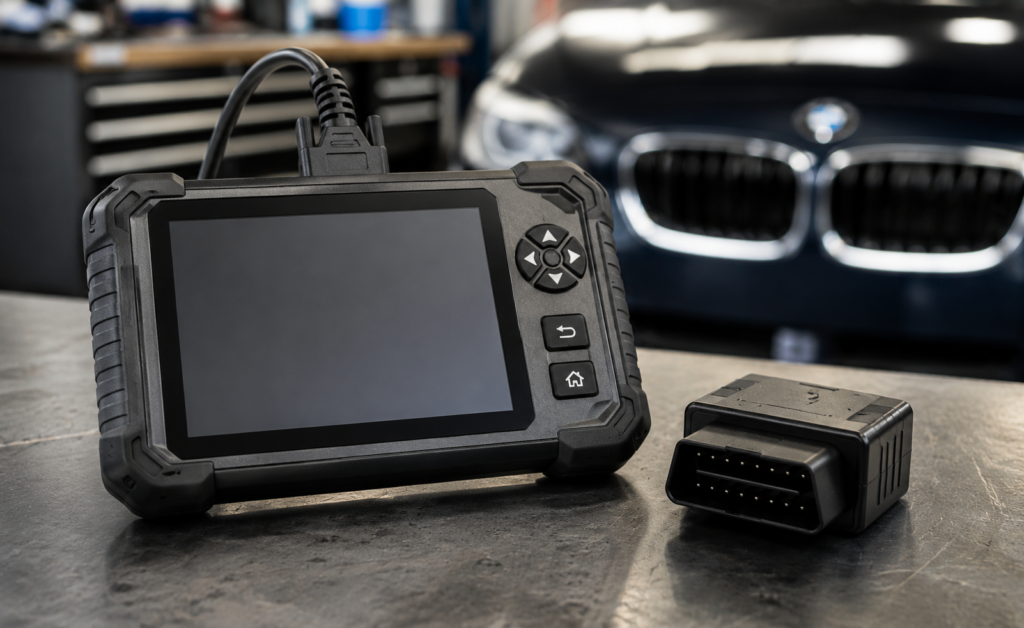
A generic OBD2 scanner is best for basic engine and emissions codes. A BMW scanner is better when you need deeper access to BMW systems beyond the standard check engine light.
- Generic OBD2 scanner: best for basic check engine light codes
- BMW-specific scanner: best for BMW modules, service functions, brake warnings, battery issues, and deeper diagnostics
- App-based BMW scanner: best for owners who want phone-based diagnostics and coding/service app support
- Advanced diagnostic tablet: best for serious DIY owners or multi-car households
If you only want to read a basic check engine light, a simple OBD2 code reader may be enough. If you own a BMW long-term and want to diagnose more than basic emissions faults, a BMW-capable scanner is usually the better buy.
If you already know you need more than a basic code reader, the next step is choosing the right scanner. See our best BMW diagnostic tools for DIY owners for recommended handheld, app-based, budget, and advanced scanner options.
What Is a Generic OBD2 Scanner?
A generic OBD2 scanner is a basic code reader that plugs into the OBD2 port and reads standard diagnostic trouble codes. These tools are usually designed around engine and emissions-related problems.
For a BMW owner, a generic OBD2 scanner can still be useful. It may read basic check engine light codes, clear simple codes, and show limited live data depending on the tool.
The limitation is that many BMW problems are not limited to generic engine codes. BMWs have many control modules, and a cheap OBD2 reader may not see faults stored in BMW-specific systems.
What Can a Generic OBD2 Scanner Read on a BMW?
A generic OBD2 scanner may help with basic problems like:
- Check engine light codes
- Emissions-related faults
- Basic misfire codes
- Some oxygen sensor or catalytic converter codes
- Some fuel trim or airflow-related codes
- Basic live data, depending on the scanner
That can be enough if you are only trying to understand why the check engine light came on. For example, if your BMW has a basic misfire code or emissions fault, a simple scanner may point you in the right direction.
If your issue is a check engine light, start with this guide: BMW check engine light causes and codes.
If you already pulled a code and want to know what it means, use our BMW fault code list and troubleshooting guide for common BMW check engine and OBD2 codes.
What a Generic OBD2 Scanner Usually Cannot Do
The problem with a generic OBD2 scanner is that it often stops at the basic engine side of the car. That can leave out many of the systems BMW owners actually need to diagnose.
A basic OBD2 scanner may not properly access:
- ABS and stability control modules
- Airbag/SRS faults
- Transmission modules
- Body control modules
- BMW-specific service reset functions
- Battery registration or battery-related service functions
- Brake pad warning details
- Manufacturer-specific BMW fault information
This is why a cheap OBD2 scanner can be frustrating. It may say “no codes found” while your BMW still has warning lights or stored faults in another module.
What Is a BMW Scanner?
A BMW scanner is a diagnostic tool that is designed to communicate with more BMW systems than a basic OBD2 code reader. Depending on the scanner, it may read BMW-specific fault codes, access multiple modules, perform service resets, view live data, and help with battery or brake-related maintenance functions.
This does not mean every BMW scanner is equal. Some tools are basic BMW-capable code readers. Others are app-based adapters. More advanced scanners are closer to professional diagnostic tablets.
The key is to match the scanner to what you actually need. A beginner does not always need the most expensive diagnostic tablet, but a $25 generic reader may be too limited for long-term BMW ownership.
What Can a BMW Scanner Do That a Basic OBD2 Scanner Cannot?
A BMW-capable scanner may help with:
- BMW-specific fault codes
- Multiple control modules
- ABS, airbag, transmission, and body system faults
- Service reset functions
- Brake pad warning and service information
- Battery registration support, depending on the tool
- Better live data and freeze-frame information
- More useful troubleshooting before replacing parts
This is where a BMW scanner becomes more useful than a basic code reader. It can help you understand what the car is actually reporting instead of guessing from symptoms alone.
Battery replacement is a good example of where BMW-specific capability matters. If you need to register a new battery, see our BMW battery registration guide for the DIY process, tool options, cost, and when registration differs from battery coding.
Which Type of BMW Scanner Do You Actually Need?
| If You Need To… | Scanner Level |
|---|---|
| Read and clear basic check engine light codes | Generic OBD2 scanner |
| Read BMW-specific modules and faults | BMW-capable diagnostic scanner |
| Perform service resets or battery registration | BMW scanner with supported service functions |
| Use live data for deeper troubleshooting | BMW-specific or advanced diagnostic scanner |
| Perform active or bidirectional tests | Advanced diagnostic tablet |
| Work on multiple makes and vehicles | Advanced multi-brand scanner |
If you already know which level of capability you need, see our Best BMW Diagnostic Tool guide for our recommended options from basic code readers through advanced diagnostic scanners.
BMW OBD2 Scanner vs BMW Diagnostic Tool
The terms get confusing because people use “BMW OBD2 scanner,” “BMW scanner,” “BMW diagnostic scanner,” and “BMW diagnostic tool” almost interchangeably.
In practical terms:
- BMW OBD2 scanner usually means a scanner that plugs into the OBD2 port and has some BMW support.
- BMW diagnostic scanner usually implies deeper diagnostic access than a basic code reader.
- BMW diagnostic tool may include handheld scanners, app-based adapters, or advanced diagnostic tablets.
Do not worry too much about the name. Worry about what the tool can actually do for your BMW model, battery type, service needs, and warning lights.
When a Basic OBD2 Scanner Is Enough
A basic OBD2 scanner may be enough if you only need to:
- Read a check engine light
- Clear a simple engine code after a repair
- Check basic emissions readiness
- Pull common powertrain codes
- Do occasional basic troubleshooting
This is the budget route. It can make sense if you rarely work on the car and just want to know why the check engine light came on.
But for most BMW owners who plan to keep the car, a basic generic scanner is usually not the best long-term tool.
When You Need a BMW-Specific Scanner
A BMW-specific scanner makes more sense if you are dealing with:
- Repeated check engine lights
- Misfires or rough running
- Brake pad warning lights
- Battery warnings or battery replacement
- Service reset needs
- ABS, airbag, transmission, or chassis warnings
- DIY maintenance beyond basic oil changes
If your BMW feels like it is misfiring, read this next: BMW Misfire: Causes, Symptoms, Diagnosis & Fixes.
If you are building out your garage setup, the scanner should also fit into your broader tool plan. See the BMW tools and garage essentials guide for the main tools worth owning first.
Can a Generic OBD2 Scanner Read BMW Codes?
Yes, a generic OBD2 scanner can usually read some BMW codes, especially standard engine and emissions codes. That does not mean it can read every BMW fault.
The issue is that BMWs store faults across different systems. A generic reader may catch a powertrain code but miss faults in ABS, airbag, battery management, service functions, or other BMW-specific modules.
That is why a generic scanner may be fine for a quick check engine light read, but limited for serious BMW troubleshooting.
App-Based BMW Scanner vs Handheld BMW Scanner
BMW owners usually choose between app-based scanners and handheld scanners.
App-based BMW scanners use a Bluetooth or Wi-Fi adapter with a phone app. They can be convenient, portable, and useful for owners who already prefer phone-based tools.
Handheld BMW scanners are standalone tools with their own screen and menus. They are better if you do not want to depend on a phone, app subscription, or app compatibility.
Neither option is automatically better. The best choice depends on whether you prefer a simple standalone tool or a phone-based setup with app support.
Once you start pulling codes, keep notes instead of relying on memory. I’m testing interest in a BMW Owner Maintenance & Upgrade Tracker for scanner codes, warning lights, service history, repairs, parts, and upcoming maintenance.
What to Avoid When Buying a BMW Scanner
Avoid these mistakes when choosing a scanner for your BMW:
- Buying the cheapest scanner and expecting full BMW module access
- Assuming every OBD2 scanner can reset BMW service functions
- Ignoring battery registration needs
- Assuming app-based tools have no extra app costs
- Buying an advanced tablet when a simpler BMW scanner would be enough
- Forgetting to confirm coverage for your BMW model and year
The scanner needs to match your car and your use case. A good tool for basic code reading may be weak for service functions. A powerful scanner may be overkill if you only need occasional check engine light reads.
Which Scanner Should Most BMW Owners Buy?
Most BMW owners should skip the cheapest generic OBD2 reader and choose a BMW-capable scanner or app-based setup instead.
If you only need basic check engine light reading, a budget OBD2 scanner can work. But if you want to diagnose BMW-specific warning lights, service messages, brake warnings, battery issues, or deeper module faults, a BMW scanner is the better long-term tool.
For product options, see the full BMW diagnostic tool guide.
Ready to choose a scanner? Compare our recommended BMW diagnostic tools and OBD2 scanners to find the best option for basic codes, maintenance resets, live data, battery registration, and deeper BMW diagnostics.
Final Recommendation
A generic OBD2 scanner is fine for basic check engine light codes, but it is not the best tool for most long-term BMW owners.
A BMW scanner gives you a better chance of reading BMW-specific faults, understanding warning lights, and avoiding wasted parts. You do not need the most expensive diagnostic tablet to get value, but you should buy a tool that can do more than basic emissions-code reading.
If you work on your BMW yourself or plan to keep it long-term, choose a BMW-capable scanner first. It will usually pay for itself the first time it helps you diagnose the real problem instead of guessing.