Best BMW M3 Mods for Daily Driving: E92, F80 & G80 Upgrades
This post may contain affiliate links. If you buy through one of our links, we may earn a commission at no extra cost to you.
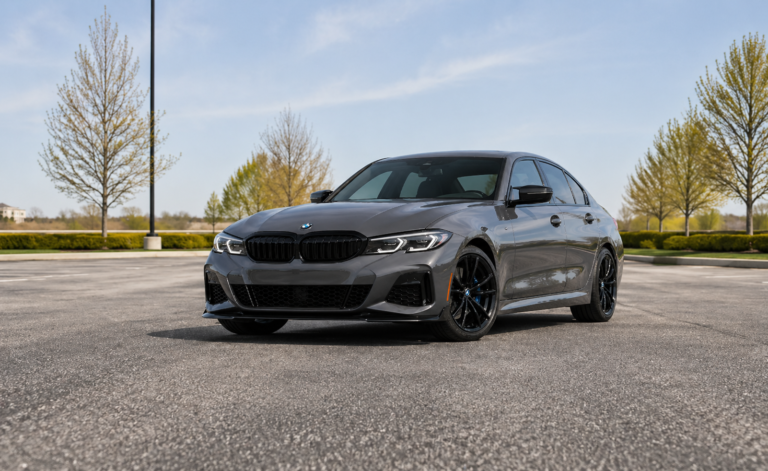
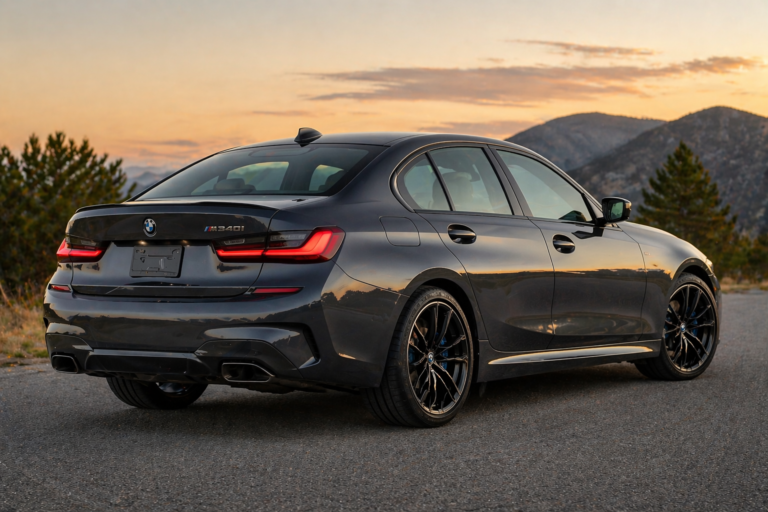
The best BMW M3 mods depend heavily on which M3 you own. An E92 with the naturally aspirated S65 V8 needs a completely different upgrade strategy than an F80 with the twin-turbo S55 or a G80 with the newer S58.
That matters because the wrong approach can turn a great street car into something louder, harsher or harder to use without actually making it better.

For a daily-driven M3, the goal should usually be to improve the parts of the car you actually notice: response, sound, traction, chassis control and usable performance. This guide breaks down the most worthwhile upgrades for the E9x, F80 and G80 generations without pretending the same modification makes sense for all three.
BMW M3 Mods by Generation
| M3 Generation | Engine | Best Upgrade Focus |
|---|---|---|
| E90 / E92 M3 | S65 naturally aspirated V8 | Exhaust, intake sound, suspension, wheels and chassis feel |
| F80 M3 | S55 twin-turbo inline-six | Intake, exhaust, downpipes, tuning, suspension and traction |
| G80 M3 | S58 twin-turbo inline-six | Intake, exhaust, downpipes, tuning, suspension and usable power |
Jump to your M3: E90/E92 M3 | F80 M3 | G80 M3
What Should You Upgrade First on a BMW M3?
Before buying performance parts, make sure the car has a solid baseline. Tires, alignment, brakes, fluids and worn suspension components can matter more to how an M3 drives than adding another power modification.
For most street-driven M3s, a sensible order looks like this:
- Baseline maintenance and tires — fix worn components before modifying around them.
- Sound and response — intake or exhaust changes can make the car more enjoyable without radically changing drivability.
- Suspension and alignment — improve chassis control without automatically chasing the lowest ride height.
- Power modifications — especially relevant to the turbocharged F80 and G80.
- Wheels and fitment — once you know the suspension height and intended tire setup.
The priority changes by generation, though. An E92 owner looking for more character will usually get more value from exhaust and chassis upgrades than from chasing naturally aspirated horsepower. An F80 or G80 owner has a much more direct path to additional turbocharged power.
Best E90 / E92 M3 Mods: S65 V8
The E9x M3 is different from the later turbo cars because its S65 V8 is naturally aspirated. That makes sound, throttle response and chassis feel especially important.
For a street-driven E90 or E92, I would focus first on exhaust, intake, suspension condition and tires rather than approaching the car like an F80 or G80 power build.
1. E92 M3 Exhaust
An exhaust is one of the most logical E92 M3 upgrades because the S65 is an engine you buy partly for the way it sounds.
The important part for a daily driver is balancing volume with usability. A system that sounds great during a short acceleration clip can become tiring if it drones at normal highway speeds.
When comparing systems, pay attention to:
- Cold-start volume
- Highway drone
- Cabin resonance
- Tip appearance
- Weight
- Whether the system changes only the rear section or more of the exhaust
2. E92 M3 Intake
An intake is more about induction sound, appearance and response than transforming the S65 into a dramatically faster engine by itself.
That can still make it a worthwhile street mod. The S65’s character comes from revs and sound, so increasing induction noise can make the engine feel more engaging without making the car louder everywhere you drive.
Look for a well-designed system that isolates incoming air appropriately and does not trade good filtration or consistent airflow for noise alone.
If you’re still deciding what type of intake makes sense, our BMW intake guide for daily driving explains sound, heat management and the tradeoffs between different intake designs.
3. E92 M3 Suspension and Coilovers
Suspension upgrades can make a major difference on an older M3, but condition matters before modification.
If dampers, bushings or other components are worn, lowering the car on top of tired hardware will not create the controlled chassis you are looking for.
For a street car, quality dampers, springs or well-chosen coilovers generally make more sense than chasing an extreme drop.
Our BMW coilovers guide explains ride quality and what to consider before buying coilovers for a street-driven BMW.
4. E92 M3 Wheels and Tires
Wheels are one of the most popular M3 modifications, but fitment deserves more attention than simply choosing the widest wheel available.
Wheel width, diameter, offset, tire size, suspension height and alignment all interact. If the car will be lowered, decide on the suspension setup before locking in aggressive wheel fitment.
For a daily driver, tire quality usually matters more than chasing maximum visual aggression.
5. E92 M3 Tune
Software can still be part of an E92 build, but expectations should be different from the turbocharged cars.
The S65 does not have the same easy software-only power path as the S55 or S58. For most street owners, exhaust note, intake sound, chassis feel and maintaining the engine properly are likely to make a bigger difference to the ownership experience.
Best F80 M3 Mods: S55 Twin-Turbo
The F80 changes the modification strategy completely. Its S55 twin-turbo engine responds to airflow and software changes in a way the naturally aspirated E9x does not.
That does not mean power should automatically be the first modification. On a street-driven F80, traction, chassis setup and how the car delivers power matter just as much as peak output.
1. F80 M3 Intake
An intake is one of the easier F80 modifications because it can add more turbo and induction sound without fundamentally changing the car’s behavior.
It is a good first step for an owner who wants the car to feel and sound more modified without immediately moving into tuning or exhaust changes.
2. F80 M3 Exhaust
The F80’s exhaust is another area where owners often want more character, but louder does not automatically mean better for a daily driver.
Compare systems based on cold-start volume, tone under load, highway drone and whether the exhaust still works well during normal commuting.
3. F80 M3 Downpipes
Downpipes move the F80 into a more serious level of modification.
They can change exhaust flow and sound and are commonly paired with additional tuning, but they also introduce more questions about emissions compliance, check-engine lights, noise and software requirements.
For a street car, check local emissions laws and the manufacturer’s requirements before buying. Do not assume every downpipe is legal for public-road use or that every setup behaves the same without supporting software.
For a closer comparison of catted options, see our best S55 downpipes guide. It compares CTS Turbo, Racing Dynamics, Wagner Tuning, and Active Autowerke for the F80 M3, F82/F83 M4, and M2 Competition, including fitment, pricing, tuning considerations, and check-engine-light risks.
4. S55 Charge Pipe Upgrade
A charge-pipe upgrade becomes especially relevant when an F80 is moving beyond basic sound modifications and into a more involved turbocharged build.
This is another area where fitment and the rest of the setup matter more than simply buying the most aggressive-looking part. We are keeping the topic separate from the main M3 hub because S55 charge pipes can serve several BMW models and deserve their own focused guide.
5. F80 M3 Coilovers and Suspension
A good suspension setup can make the F80 easier to use rather than simply making it lower.
For daily driving, prioritize damper quality, usable ride height and alignment range. Extremely stiff settings or excessive lowering can make the car worse on imperfect roads even if the stance looks more aggressive.
If you’re deciding between a mild drop and a complete adjustable setup, compare our BMW lowering springs guide with the BMW coilovers guide.
6. F80 M3 Tune
Software is where the S55’s turbocharged platform really separates itself from the E9x.
But a tune should be part of a complete plan rather than the automatic first purchase. Consider fuel requirements, heat, traction, supporting hardware and how much additional power you can realistically use on the street.
For a daily driver, smooth delivery and consistency are more important than chasing the biggest dyno number.
Best G80 M3 Mods: S58 Twin-Turbo
The G80 starts with an extremely capable chassis and S58 engine, so modification should be more selective rather than assuming every factory component needs replacement.
For many daily-driven G80s, the most satisfying first upgrades are the ones that increase sound, character and stance before adding significantly more power.
1. G80 M3 Intake
An intake is one of the easier ways to make the S58 feel more dramatic without changing the car’s basic drivability.
More audible turbo and induction sound can make normal driving more engaging, which is why an intake often makes sense before more involved power modifications.
2. G80 M3 Exhaust
Exhaust changes can give the G80 more personality, but the same daily-driver rules still apply: evaluate the system at normal cruising speed, not only during wide-open-throttle videos.
Consider how much volume you want during cold starts, commuting and highway driving before choosing the most aggressive system available.
3. G80 M3 Downpipes
Like the F80, downpipes move the G80 into a more involved level of modification.
The S58 has substantial performance potential, but downpipe choice affects more than power. Sound, emissions compliance, warning lights and tuning requirements all need to be considered before installation.
For a street-driven G80, verify local requirements and the exact manufacturer’s intended use rather than assuming every aftermarket downpipe is appropriate for public-road use.
4. G80 M3 Coilovers and Suspension
The G80 does not need an extreme suspension setup to feel more purposeful.
A quality coilover system can provide ride-height adjustment and greater control, but the best street setup should still preserve enough compliance for real roads.
Before lowering the car, decide what wheel and tire setup you eventually want. Suspension height, offset and tire dimensions all affect one another.
5. G80 M3 Tune
The S58 provides a strong foundation for additional power, but that does not make tuning mandatory.
For a daily driver, consider whether additional power actually solves something you dislike about the car. Tires, chassis setup and driver confidence can matter more on the road than adding power you rarely have room to use.
BMW M3 Wheels and Tires
Wheels are a major modification category across all three generations, but they deserve their own research rather than a generic recommendation here.
Fitment depends on generation, brake clearance, suspension height, wheel width, offset and tire dimensions. An E92 fitment strategy should not be copied onto an F80 or G80 simply because all three cars wear an M3 badge.
For now, the safest approach is to choose suspension height first and then build the wheel-and-tire setup around the actual car.
Best M3 Mods by Goal
| Goal | Best Place to Start |
|---|---|
| More sound | Intake or exhaust |
| Better street handling | Tires, alignment, suspension |
| More power — E92 | Set realistic naturally aspirated expectations before spending heavily |
| More power — F80 | Software and supporting S55 hardware |
| More power — G80 | Software and supporting S58 hardware |
| Better stance | Springs or coilovers before finalizing wheel fitment |
| Daily-driver improvement | Maintenance, tires, sound and mild suspension upgrades |
M3 Coilovers vs Lowering Springs
Lowering springs make sense when you want a modest drop and simpler setup. Coilovers make more sense when you want adjustable ride height, different damping characteristics or a more comprehensive suspension change.
Neither is automatically better for every M3.
A street car that spends most of its life commuting may benefit more from a mild, well-matched suspension setup than an aggressively lowered coilover configuration.
For a broader comparison, see our BMW suspension upgrades guide.
BMW M3 Mods I Would Not Do First
- Big power before good tires: More output does not help much if the car cannot put it down consistently.
- Extreme lowering: Losing suspension travel and ground clearance can make a street car worse to live with.
- The loudest exhaust available: A system that sounds exciting briefly can become exhausting during highway driving.
- Random parts without a plan: Decide whether the goal is sound, power, handling or appearance before buying parts.
- Copying another generation’s setup: E92, F80 and G80 upgrade paths are substantially different.
A Sensible Daily-Driver M3 Build
If the goal is a fast, enjoyable M3 that remains easy to use every day, I would keep the build relatively simple.
Start with maintenance, tires and alignment. Then choose an intake or exhaust if you want more character. Improve the suspension only as much as your roads and driving justify. On an F80 or G80, move into power modifications after the chassis and tires are ready for the additional output.
The best BMW M3 mods are the ones that make you enjoy the car more often, not the ones that create the longest parts list.
BMW M3 Mods FAQ
What is the best first mod for a BMW M3?
For any generation, start with maintenance and good tires. After that, an intake or exhaust is a sensible first modification for owners who want more sound and character without dramatically changing the car.
What are the best E92 M3 mods?
For a street-driven E92, exhaust, intake, suspension and wheels are strong starting points. Because the S65 is naturally aspirated, the modification strategy is different from the turbocharged F80 and G80.
What are the best F80 M3 mods?
Popular F80 upgrades include intake, exhaust, S55 downpipes, charge-pipe upgrades, tuning and suspension. For a daily driver, make sure tires and chassis setup can support any additional power.
What are the best G80 M3 mods?
G80 owners commonly look at intake, exhaust, S58 downpipes, tuning, coilovers and wheel fitment. Because the stock car is already highly capable, selective upgrades usually make more sense than replacing parts simply because aftermarket versions exist.
Do you need a tune for an M3 intake?
Not every intake requires tuning. Requirements depend on the specific generation, intake design and manufacturer. Follow the product manufacturer’s installation and software guidance for the exact part.
Are M3 downpipes worth it for a daily driver?
They can make sense on a modified F80 or G80, but they are not an automatic first upgrade. Consider noise, emissions legality, warning lights, tuning requirements and how much additional performance you actually want from the car.
Should I install lowering springs or coilovers on an M3?
Lowering springs are better suited to owners who mainly want a modest drop, while coilovers provide more adjustment and can change the suspension more substantially. The right choice depends on ride-quality expectations, budget and how the M3 is used.