BMW Increased Battery Discharge: Causes, Battery Drain & What to Do
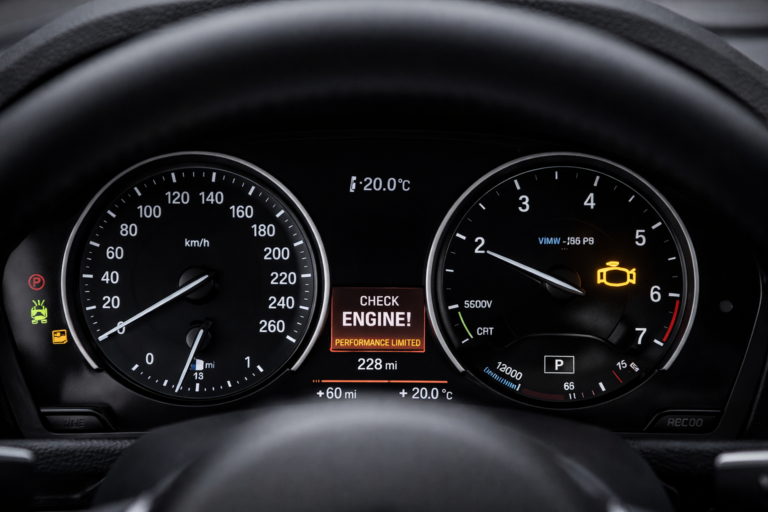
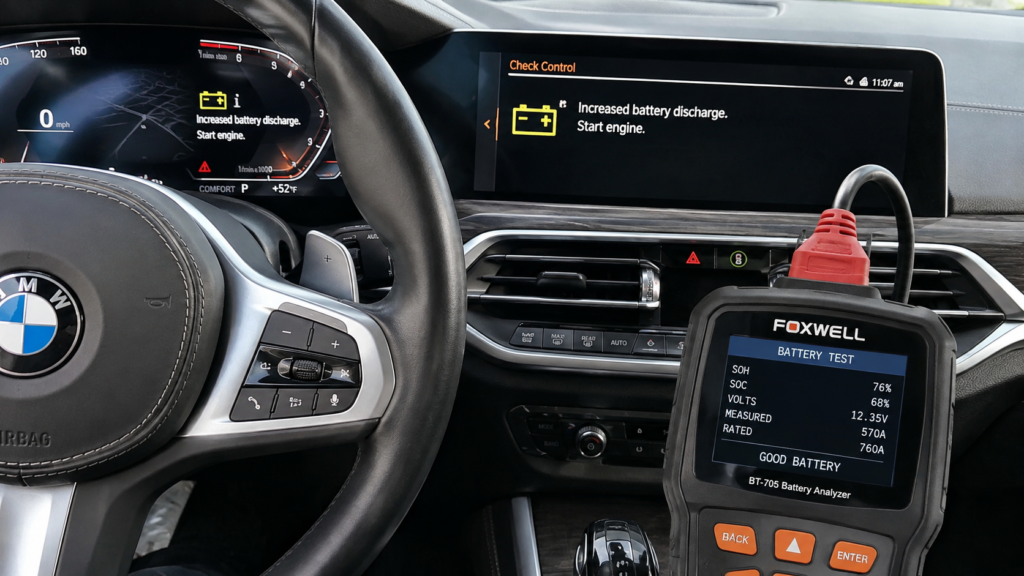
If your BMW displays an Increased Battery Discharge warning, the car has detected that the 12-volt battery’s state of charge is lower than expected or that electrical energy is being consumed faster than the vehicle can comfortably manage.
The cause is not always a bad battery. A weak or aging battery is common, but short-trip driving, cold weather, a module that refuses to go to sleep, aftermarket electronics, charging-system problems, or an excessive parasitic draw can all contribute to a BMW battery discharge warning.
This guide explains what BMW increased battery discharge means, the most common causes, what to check first, how to tell battery failure from battery drain, and when a charger, scanner, battery replacement, or professional electrical diagnosis makes sense.
This page contains affiliate links. If you buy through them, we may earn a commission at no extra cost to you.
BMW Increased Battery Discharge: Quick Answer
A BMW increased battery discharge warning usually means the vehicle has detected a low battery state of charge, excessive electrical consumption while the car is off, or another power-management condition that could eventually affect starting.
Start by checking battery age and condition, how the car is driven, whether accessories have been added, and whether the charging system is working normally. If the warning repeatedly returns after the battery is fully charged, the car may need deeper diagnosis for parasitic draw, sleep-mode problems, or stored power-management faults.
| What You Notice | Likely Direction | What to Check First |
|---|---|---|
| Warning after several short trips | Battery not being fully replenished | Battery condition and driving pattern |
| Warning after car sits overnight | Weak battery or excessive draw while parked | Battery test and parasitic-draw diagnosis |
| New battery but warning remains | Drain, charging problem, registration issue, or other electrical fault | Confirm replacement procedure and diagnose power management |
| Warning mainly in cold weather | Weak battery capacity exposed by low temperatures | Battery age and load test |
| Car repeatedly needs a jump start | Battery failure, charging fault, or significant drain | Battery and charging-system test |
| Warning after dash cam or accessory install | Accessory may remain powered while parked | Inspect accessory wiring and parking-mode settings |
What Does BMW Increased Battery Discharge Mean?
BMWs monitor battery condition and electrical energy use rather than simply waiting for the battery to become completely dead. When the power-management system sees a low state of charge or abnormal energy use, the car can display a battery-related Check Control message.
The wording varies by BMW generation. Owners may see messages such as Increased Battery Discharge, Battery Discharge While Stopped, increased battery drain, or another warning telling the driver to start the engine or reduce electrical consumption.
The warning does not automatically identify the failed part. It is telling you that the vehicle’s energy-management system sees a battery or electrical condition that deserves attention.
Most Common Causes of BMW Increased Battery Discharge
1. Weak or Aging 12-Volt Battery
A weak battery is one of the most common places to start. A battery can still start the car most of the time while having significantly less usable capacity than it did when new.
Cold weather, repeated short trips, age, long periods of inactivity, and repeated deep discharges can all make a marginal battery more obvious.
Do not judge battery health only by whether the engine starts. A proper battery test can reveal poor capacity or weak performance that a simple voltage reading may miss.
2. Too Many Short Trips
Short-trip driving can create a simple energy deficit. Starting the car consumes battery power, and a brief drive may not provide enough time to fully replace that energy while the vehicle is also running climate control, lights, heated seats, electronics, and other electrical loads.
If the BMW mainly sees short local trips, especially during cold weather, the battery may remain chronically undercharged even when no major electrical fault exists.
3. Parasitic Battery Drain While the BMW Is Parked
A BMW battery drain problem occurs when too much current continues to flow after the car should have entered its normal low-power sleep state.
Possible causes include:
- A control module that stays awake
- Repeated module wake-ups
- A stuck relay
- Interior, glove-box, or luggage-compartment lighting faults
- Comfort Access or other electronic-system problems
- Faulty wiring or electrical components
- Aftermarket accessories connected to constant power
A parasitic drain is especially suspicious when a healthy, fully charged battery repeatedly becomes weak after the car sits.
4. A BMW Module Is Not Going to Sleep
Modern BMWs have many electronic modules that remain active for a period after the car is turned off. Eventually, the vehicle should enter a lower-power sleep state.
If a module does not shut down correctly—or something repeatedly wakes the network—the battery can continue losing energy while the car is parked.
This can be difficult to diagnose with a basic multimeter alone because opening doors, unlocking the car, or disturbing the vehicle during testing can wake modules back up.
5. Aftermarket Electronics
Dash cams, radar detectors, audio equipment, lighting, GPS trackers, chargers, and other accessories can create battery-drain problems when they are wired incorrectly or configured to remain active while the BMW is parked.
If the increased battery discharge warning began shortly after an accessory was installed, that installation belongs near the top of the troubleshooting list.
6. Charging-System Problems
Sometimes the problem is not that the BMW is using too much electricity while parked. The battery may simply not be receiving enough charge while the engine is running.
Possible charging-system problems include:
- Alternator or voltage-regulation faults
- Belt or pulley problems
- Electrical connection problems
- Power-management faults
This is why repeatedly replacing or charging the battery without checking the charging system can fail to solve the problem.
7. Intelligent Battery Sensor or Power-Management Faults
BMW uses an Intelligent Battery Sensor, commonly called the IBS, as part of the vehicle’s battery and energy-management strategy on many models.
An IBS, wiring, software, or power-management problem can contribute to incorrect battery information or battery-discharge warnings on certain BMW applications.
Do not replace the IBS simply because the warning appears. BMW-specific diagnosis is the better approach because several unrelated conditions can produce similar battery warnings.
BMW Battery Discharge While Stopped: What Does It Mean?
A BMW battery discharge while stopped message points specifically toward battery energy being lost or battery state of charge becoming too low while the vehicle is parked.
That can happen because the battery itself has poor capacity, the car is not entering its expected sleep state, an electrical consumer remains active, or the vehicle has already started with a low state of charge because of its recent driving pattern.
If the warning appears once after the BMW has been parked for an unusually long time, charge and monitor the battery. If it returns repeatedly after normal use, investigate rather than assuming the warning is harmless.
BMW Battery Keeps Dying: Battery or Parasitic Drain?
If your BMW battery keeps dying, determine whether the battery itself is weak before spending hours searching for a parasitic draw.
| Pattern | What It Suggests |
|---|---|
| Old battery fails testing | Battery replacement may solve the problem |
| Healthy battery dies after one night | Significant parked-current draw deserves investigation |
| Battery becomes weak after several days | Small parasitic draw, low battery capacity, or infrequent use |
| Battery stays weak even after longer drives | Battery condition or charging-system problem |
| Problem began after accessory installation | Inspect aftermarket wiring and accessory settings |
| New registered battery still goes dead | Look beyond the battery for charging or electrical faults |
A new battery should not become the default fix for every battery warning. If a replacement battery quickly develops the same problem, the underlying electrical or charging issue still needs to be found.
How to Diagnose BMW Increased Battery Discharge
Work through the problem in order rather than replacing the battery, alternator, IBS, or control modules based on guesswork.
Step 1: Check Battery Age and Condition
Start with the battery itself. Record its age if known and have it properly tested if it is several years old, has been repeatedly discharged, or struggles in cold weather.
A battery that fails a proper test should be addressed before you spend significant time diagnosing smaller parasitic draws.
Step 2: Fully Charge the Battery
If the battery is simply undercharged from short trips or storage, fully charging it gives you a better starting point for diagnosis.
A smart battery charger or maintainer is useful for BMWs that sit for long periods, receive infrequent use, or repeatedly make short trips.
Step 3: Check the Charging System
Make sure the battery is actually being charged correctly while the vehicle is running. Battery voltage alone does not tell the entire story on a modern BMW, but obvious charging-system faults need to be ruled out before diagnosing parked-current draw.
Step 4: Scan for BMW Power-Management Faults
A BMW-capable diagnostic scanner can provide much more useful information than a basic engine-code reader when the problem involves battery management, control modules, electrical faults, or energy-management history.
Do not assume that a generic OBD2 scanner can see every fault related to an increased battery discharge warning.
Step 5: Inspect Anything Added to the Car
Disconnect or temporarily disable aftermarket accessories when practical and see whether the battery-discharge problem changes.
- Dash cams
- Radar detectors
- Phone chargers and USB accessories
- Aftermarket audio equipment
- Lighting modifications
- GPS trackers
- Remote-start or alarm systems
Step 6: Test for Parasitic Draw
If the battery and charging system test correctly but the BMW still loses charge while parked, parasitic-draw testing becomes more important.
The vehicle needs time to enter its normal sleep state before meaningful parked-current measurements are taken. Opening doors, unlocking the car, operating switches, or interacting with modules during the test can wake the vehicle and distort the result.
Once excessive draw is confirmed, circuits can be isolated methodically until the source is identified.
Does a Battery Tender Fix BMW Increased Battery Discharge?
Sometimes—but only when the underlying problem is insufficient charging rather than a genuine electrical fault.
| A Battery Tender Can Help When… | A Battery Tender Will Not Fix… |
|---|---|
| The BMW sits for long periods | A failed battery |
| The vehicle mainly makes short trips | A large parasitic electrical draw |
| The battery needs maintenance during seasonal storage | A faulty alternator or charging system |
| You want to maintain a healthy battery’s state of charge | A module that refuses to sleep |
| The car is infrequently driven | Damaged wiring or a faulty electrical component |
If a maintainer prevents the warning only because it continuously compensates for an abnormal electrical draw, the underlying fault still exists.
BMW Increased Battery Discharge After Battery Replacement
If the warning appeared after installing a new battery, first confirm that the correct battery specification was installed and that the replacement procedure was completed properly for the specific BMW.
Many BMW applications require the replacement battery to be registered with the vehicle’s battery-management system. Registration tells the car that a new battery has been installed so the power-management strategy can account for the replacement.
If you have already replaced the battery—or are preparing to—see our BMW battery registration guide for the registration procedure, compatible DIY tools, typical costs, and the difference between battery registration and coding.
Battery registration is important, but it should not be used to hide an existing battery-drain problem. If the previous battery repeatedly discharged because of an electrical fault, replacing and registering a new battery does not repair the fault that caused the discharge.
If the new battery continues losing charge after the correct replacement and registration procedure, diagnose the charging system, electrical draw, power-management faults, and recent work instead of replacing another battery.
BMW Battery Registration vs Battery Drain: They Are Not the Same Problem
Battery registration and battery-drain diagnosis solve two different problems.
| Battery Registration | Battery Drain Diagnosis |
|---|---|
| Performed after installing a replacement battery on applicable BMWs | Performed when battery energy is being lost abnormally |
| Updates the vehicle’s battery-management information | Finds unwanted electrical consumption or charging faults |
| Does not prove the old battery was the root cause | Identifies why a healthy battery may keep going dead |
| Can require a BMW-capable diagnostic tool | May require electrical testing plus BMW diagnostics |
This distinction matters because installing and registering a new battery without diagnosing repeated discharge can erase an important symptom without fixing the cause.
Is It Safe to Drive With a BMW Battery Discharge Warning?
A battery-discharge warning does not automatically mean the BMW will stop running immediately, but it should not be ignored if it repeatedly returns.
The main practical risk is that the battery may eventually become too weak to start the vehicle. BMW may also reduce or shut down certain electrical functions as part of its effort to preserve enough energy for starting.
Address the problem more quickly if:
- The BMW needs repeated jump starts
- The warning returns every day
- The battery is becoming visibly weaker
- Multiple electrical systems are malfunctioning
- The battery or charging system fails testing
- The vehicle becomes completely dead after sitting
DIY Checks vs Professional BMW Electrical Diagnosis
| Reasonable DIY Checks | When Professional Diagnosis Makes Sense |
|---|---|
| Check battery age | Healthy battery repeatedly dies overnight |
| Fully charge and monitor battery | Module or network sleep problem suspected |
| Inspect aftermarket accessories | Parasitic draw needs circuit isolation |
| Look for lights or obvious devices staying on | Charging-system faults are present |
| Scan with a capable BMW diagnostic tool | Multiple power-management faults are stored |
| Use a maintainer for an infrequently driven BMW | The new battery continues to discharge |
The expensive mistake is replacing one electrical component after another without proving which system is actually responsible for the discharge.
BMW Increased Battery Discharge FAQ
What does increased battery discharge mean on a BMW?
It means the vehicle’s energy-management system has detected a low battery state of charge, abnormal electrical consumption, or another battery-management condition. The message does not automatically mean the battery itself has failed.
Why does my BMW say increased battery discharge in cold weather?
Cold weather reduces available battery performance while also increasing electrical demand from heating, lighting, defrosting, and other systems. An aging or marginal battery often becomes more obvious during winter.
Can short trips cause a BMW battery discharge warning?
Yes. Repeated short trips may consume more energy during starting and normal vehicle operation than the charging system has time to replace, leaving the battery at a lower state of charge.
Why does my BMW battery keep dying overnight?
A weak battery can die overnight, but a healthy battery that repeatedly becomes discharged after sitting may indicate excessive parasitic draw, a module staying awake, aftermarket electronics, or another electrical fault.
Will replacing the battery fix increased battery discharge?
Only if the battery itself is the root cause. A new battery will eventually discharge again if the real problem is an electrical draw, charging-system fault, or module that remains active while the BMW is parked.
Does a new BMW battery need to be registered?
Many BMW models require battery registration after replacement. The exact requirement depends on the vehicle. If you are replacing the battery, see our BMW battery registration guide for the registration process, compatible DIY tools, costs, and when battery coding may also be required.
Can a BMW scanner diagnose battery drain?
A BMW-capable scanner can help by reading power-management faults, module information, and other BMW-specific diagnostic data. Physical parasitic-draw testing may still be necessary when the problem involves current being consumed while the car is parked.
Final Recommendation
If your BMW displays an increased battery discharge warning, start with the battery’s actual condition and the way the car is being used. A weak battery or repeated short trips may explain the warning without a major electrical fault.
If the battery tests healthy or the warning repeatedly returns after a full charge, move deeper into diagnosis. Check the charging system, aftermarket accessories, BMW power-management faults, sleep behavior, and parasitic draw rather than simply replacing the battery again.
A battery tender is useful for a healthy BMW that sits or receives limited use. A BMW-capable diagnostic tool is more useful when the problem involves repeated warnings or power-management faults. Neither should be used as a substitute for fixing a genuine electrical drain.