BMW Spark Plug Replacement: When to Change Them and Why It Matters
Spark plugs play a critical role in BMW engine performance, fuel efficiency, and reliability. Worn or incorrect spark plugs are a common cause of misfires, hesitation, and rough running—especially on turbocharged BMW engines.
This guide explains when BMW spark plugs should be replaced, the warning signs of failing plugs, and why proper spark plug maintenance matters for long-term engine health.
What Do Spark Plugs Do in a BMW Engine?
Spark plugs ignite the air-fuel mixture inside each cylinder. Every ignition event depends on the spark plug firing at the correct time with sufficient strength.
BMW engines place higher demands on spark plugs because many models feature:
- Turbocharging
- High compression ratios
- Advanced ignition timing
As a result, spark plugs wear faster than many owners expect.
When Should BMW Spark Plugs Be Replaced?
BMW spark plug replacement intervals vary by engine, but general guidelines include:
- Naturally aspirated engines: ~60,000 miles
- Turbocharged engines: ~30,000–45,000 miles
- Performance or tuned engines: Often sooner
Driving style, fuel quality, and engine modifications can shorten these intervals.
Always follow BMW-specific service recommendations for your engine.
Common Signs of Worn Spark Plugs
Failing spark plugs often produce noticeable symptoms, including:
- Engine misfires or hesitation
- Rough idle, especially when cold
- Reduced fuel economy
- Sluggish acceleration
- Difficulty starting the engine
In many cases, spark plug wear develops gradually, making symptoms easy to overlook.
How Spark Plugs Cause BMW Misfires
As spark plugs wear, the electrode gap increases. This weakens the spark and makes ignition less reliable under load.
On turbocharged BMW engines, weak spark plugs often cause:
- Misfires during acceleration
- Misfires under boost
- Cylinder-specific fault codes
Spark plug issues are frequently diagnosed during misfire troubleshooting.
Spark Plugs vs Ignition Coils
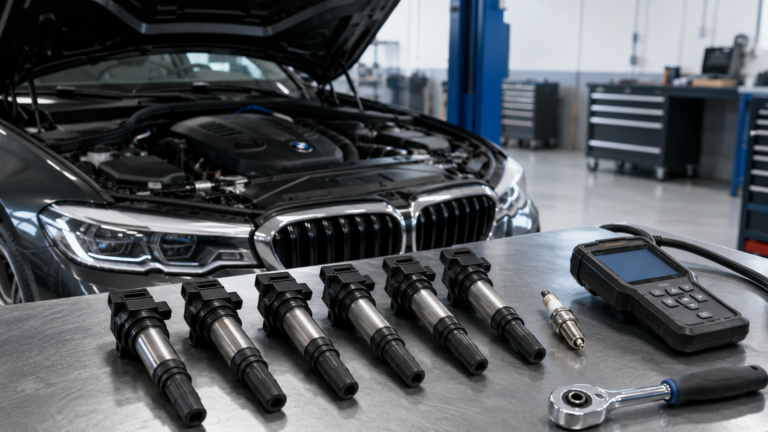
Spark plugs and ignition coils work together, but they fail differently.
- Spark plugs wear gradually over time
- Ignition coils often fail suddenly
Replacing spark plugs on schedule helps reduce stress on ignition coils and can extend their lifespan.
A misfire does not always mean the spark plugs are responsible. If a coil is suspected, review the typical BMW ignition coil replacement price and whether replacing one coil or all of them makes more sense.
DIY vs Professional Spark Plug Replacement
DIY replacement may be appropriate if:
- The engine layout allows easy access
- Correct tools are available
- Factory torque specifications are followed
Professional service is recommended when:
- Access requires intake or cowl removal
- The engine is tightly packaged
- There is uncertainty about proper plug selection
Improper installation can cause engine damage, so accuracy matters.
Why Correct Spark Plugs Matter on BMW Engines
Using the correct spark plug type is critical. BMW engines are sensitive to:
- Heat range
- Electrode material
- Plug gap
Incorrect spark plugs may cause drivability issues even if they are new.
BMW-specific diagnostic tools can help confirm whether spark plug issues are contributing to performance problems.
If the vehicle’s maintenance history is unclear, check more than the spark plugs. Our BMW oil change cost guide explains typical service pricing, DIY supplies, and model-specific differences.
Final Thoughts
Spark plug replacement is a key part of BMW maintenance that directly affects performance, reliability, and fuel efficiency. Replacing spark plugs at the correct interval helps prevent misfires, protects ignition coils, and keeps the engine running smoothly.
Wondering what the service will actually cost? See our complete breakdown of BMW spark plug replacement cost by model, including dealer, independent shop, and DIY estimates.
Understanding when and why spark plugs wear allows BMW owners to address issues early and avoid unnecessary repairs.