BMW Misfire Symptoms: How to Tell It’s a Misfire (DIY)
BMW misfire symptoms can look like a dozen other problems—rough idle, shaking, hesitation, or a check engine light. This guide helps you confirm whether you’re dealing with a misfire, what the most common codes mean, and the fastest DIY checks to run before replacing parts.
Start here if you want the full diagnosis process: see BMW misfire causes for the complete step-by-step workflow.
Most Common BMW Misfire Symptoms
- Rough idle (shaking or uneven idle)
- Hesitation when accelerating
- Loss of power or “bogging” under load
- Vibration that changes with RPM
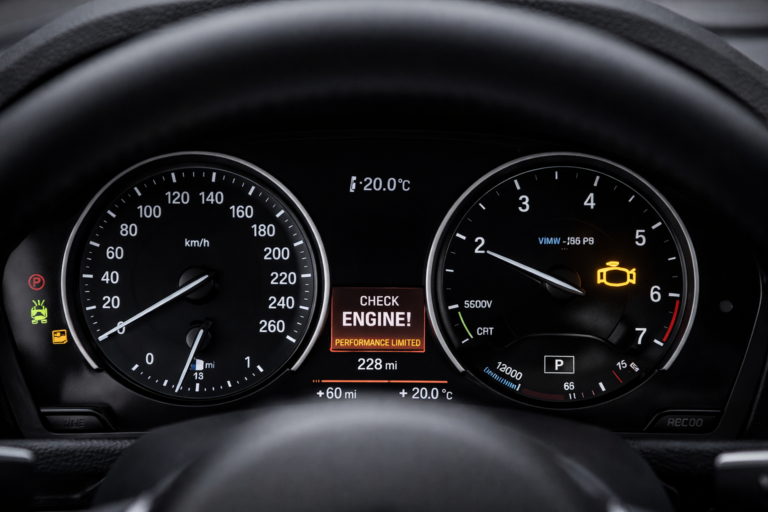
- Check engine light (solid or flashing)
- Fuel smell from the exhaust (severe cases)
A misfire can be intermittent (only under load) or constant (idle and driving). The more constant it is, the more urgent it becomes.
Flashing Check Engine Light: Stop Driving Hard
If your BMW check engine light is flashing, treat it as urgent. A severe misfire can dump unburned fuel into the exhaust and damage the catalytic converter.
If you’re unsure what the light means, read BMW check engine light.
Common Misfire Codes You’ll See
Most misfires show up as standard OBD2 codes:
- P0300 – Random/multiple cylinder misfire detected
- P0301–P0306 – Misfire detected in a specific cylinder (example: P0303 = cylinder 3)
Why this matters: cylinder-specific codes usually make diagnosis faster because you can focus on one cylinder first.
Use a scanner to confirm the code and cylinder — see best BMW diagnostic tools.
If you are trying to confirm a misfire, the scanner matters. A generic code reader may show basic misfire codes, but a BMW-capable scanner can give you more useful diagnostic detail. See BMW scanner vs OBD2 scanner for the difference.
How to Confirm It’s a Misfire (Fast Checks)
Do these in order. This prevents wasted money.
1) Pull the code first
- Write down the code (P030X matters).
- Note whether the misfire is intermittent or constant.
- If you can, note when it happens (idle vs acceleration vs highway).
2) Quick visual inspection (2 minutes)
- Loose intake clamps or disconnected hoses
- Cracked vacuum lines
- Oil in spark plug wells (possible valve cover gasket leak)
- Coil connector not fully seated
3) The “swap coil” test (best DIY test)
If you have a cylinder-specific code (P0301–P0306):
- Move the coil from the misfiring cylinder to another cylinder.
- Clear codes.
- Drive briefly and re-scan.
- If the misfire code moves, the coil is likely the issue.
- If it doesn’t move, keep going—don’t guess.
4) Check spark plugs if they’re overdue
Worn or fouled spark plugs are a common cause of misfires, especially under load. If plugs are old and you’re chasing a misfire, replacement is often justified.
5) If symptoms persist: fuel delivery or mechanical checks
If coils and plugs check out, the next suspects are fuel injector issues, fuel pressure problems, or (less commonly) compression issues. At this stage, follow the full diagnosis guide.
Misfire vs Other Common Problems (Quick Differentiation)
Misfire vs Vacuum/Intake Leak
Vacuum leaks can cause lean conditions and misfire-like symptoms, often paired with lean codes and unstable idle. If your symptoms started after intake work, re-check clamps and hoses.
Intake guide: best cold air intakes for BMW.
Misfire vs Bad Fuel / Fuel Pressure
Bad fuel or pressure issues can cause stumbling across multiple cylinders, especially under load. Confirm with codes and pattern before replacing parts.
Quick Summary
- Confirm codes (P030X matters)
- Check for obvious air leaks or loose connections
- Swap coil test to see if the misfire follows
- Inspect/replace spark plugs if overdue
- Use the full diagnosis process if it persists
Next step: Go to BMW misfire causes for the complete fix path.